How attic ventilation works, why poor airflow shortens a New Jersey roof and feeds ice dams, and how to tell whether your intake and exhaust are actually balanced.
Ventilation is the most overlooked part of a roof and one of the biggest factors in how long it lasts. In New Jersey's climate — humid summers and freeze-thaw winters — a poorly ventilated attic cooks shingles in July and breeds ice dams in January. Here is how it actually works.
What attic ventilation does
A balanced ventilation system pulls cool air in low (at the soffits/eaves) and lets hot, moist air out high (at the ridge). In summer, that flushes superheated air that would otherwise bake your shingles from below and drive up cooling bills. In winter, it keeps the roof deck cold and even, which is the single best defense against ice dams.
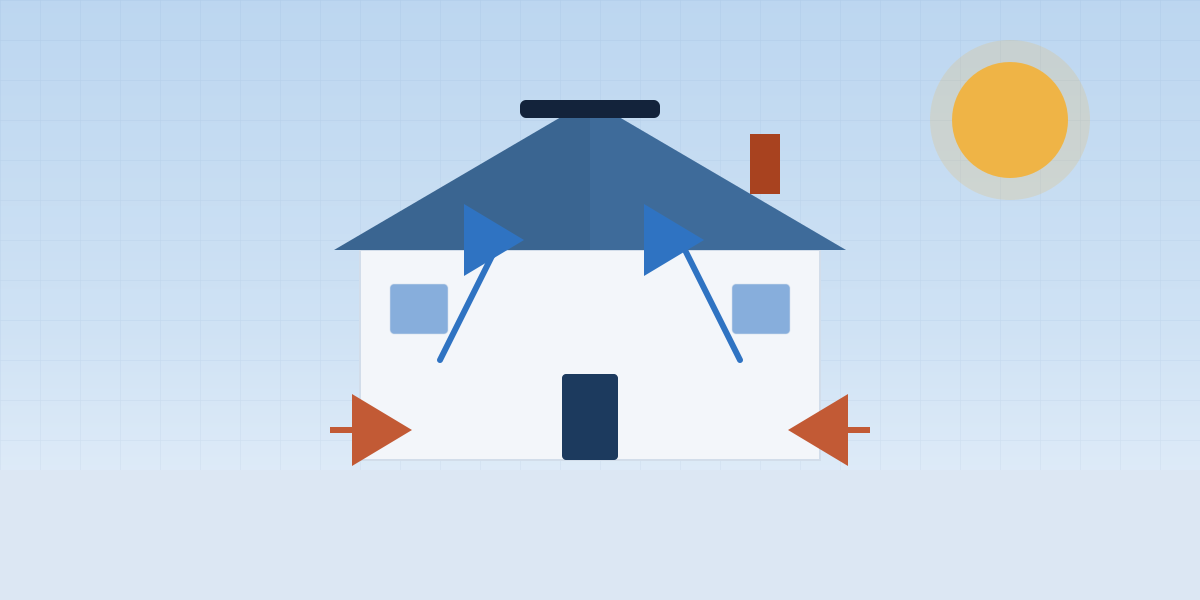
Intake and exhaust must be balanced
The classic mistake is exhaust without intake (or vice versa). A ridge vent with blocked soffits cannot draw air. As a rule of thumb, roughly equal intake and exhaust area is the target, with intake at or slightly exceeding exhaust. Insulation that buries the soffit vents is a common, fixable culprit — baffles keep the airway open.
Signs your attic is under-ventilated
- Ice dams forming at the eaves in winter.
- A blazing-hot attic and high summer cooling bills.
- Moisture, frost, or musty smells in the attic.
- Shingles aging or curling faster than expected.
- Mold spots on the underside of the roof deck.
Pinless Moisture Meter
Confirm damp spots without guessing.
Check ceilings, attic deck, and insulation for hidden moisture.
Solar Attic Vent Fan
Boost attic exhaust airflow.
Helps where intake is adequate; pair with balanced soffit venting.
Affiliate disclosure: links above are Amazon affiliate links. As an Amazon Associate we earn from qualifying purchases, at no extra cost to you. Learn more.
Passive vs. powered ventilation
Most homes do best with passive ventilation — ridge and soffit vents that need no power and rarely fail. Powered fans (including solar attic fans) can help specific situations but must be paired with adequate intake, or they will pull conditioned air from the house instead of fresh air from the soffits. More vents is not automatically better; balance is.
The ice-dam connection
Ice dams form when heat escaping into the attic melts snow on the upper roof, which refreezes at the cold eave. Good ventilation (plus air-sealing and insulation) keeps the whole deck cold so snow melts evenly and drains. For the full playbook, see our ice dam guide.
Get it checked at replacement time
The best moment to fix ventilation is during a roof replacement, when the roofer can add a ridge vent and ensure clear intake. If you are getting quotes, ask each roofer how they will address ventilation — the answer tells you a lot about their craftsmanship.
Frequently asked questions
How do I know if my attic has enough ventilation?
Signs of trouble include ice dams, a very hot attic in summer, attic moisture or frost, and shingles aging early. A balanced system has roughly equal intake (soffit) and exhaust (ridge) airflow.
Are solar attic fans worth it?
They can help in specific cases, but only if intake ventilation is adequate; otherwise they pull conditioned air from the house. Many homes are better served by balanced passive ridge-and-soffit ventilation.
Does ventilation really prevent ice dams?
It is a major factor. Keeping the roof deck cold and even — through ventilation, air-sealing, and insulation — prevents the uneven melting and refreezing that creates ice dams.